DSPIC30F6012A-20E/PT Microchip Technology, DSPIC30F6012A-20E/PT Datasheet - Page 6
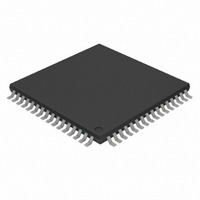
DSPIC30F6012A-20E/PT
Manufacturer Part Number
DSPIC30F6012A-20E/PT
Description
IC DSPIC MCU/DSP 144K 64TQFP
Manufacturer
Microchip Technology
Series
dsPIC™ 30Fr
Datasheets
1.DSPIC30F2011-20ISO.pdf
(66 pages)
2.DSPIC30F2011-20IP.pdf
(26 pages)
3.DSPIC30F6011A-30IPT.pdf
(234 pages)
4.DSPIC30F6011A-30IPT.pdf
(8 pages)
5.DSPIC30F6011A-30IPT.pdf
(10 pages)
6.DSPIC30F6011A-30IPT.pdf
(6 pages)
7.DSPIC30F6011A-30IPT.pdf
(8 pages)
8.DSPIC30F6011A-30IPT.pdf
(16 pages)
9.DSPIC30F6014A-20EPT.pdf
(238 pages)
Specifications of DSPIC30F6012A-20E/PT
Program Memory Type
FLASH
Program Memory Size
144KB (48K x 24)
Package / Case
64-TFQFP
Core Processor
dsPIC
Core Size
16-Bit
Speed
20 MIPS
Connectivity
CAN, I²C, SPI, UART/USART
Peripherals
AC'97, Brown-out Detect/Reset, I²S, LVD, POR, PWM, WDT
Number Of I /o
52
Eeprom Size
4K x 8
Ram Size
8K x 8
Voltage - Supply (vcc/vdd)
2.5 V ~ 5.5 V
Data Converters
A/D 16x12b
Oscillator Type
Internal
Operating Temperature
-40°C ~ 125°C
Product
DSCs
Data Bus Width
16 bit
Processor Series
DSPIC30F
Core
dsPIC
Maximum Clock Frequency
20 MHz
Number Of Programmable I/os
52
Data Ram Size
8 KB
Maximum Operating Temperature
+ 125 C
Mounting Style
SMD/SMT
3rd Party Development Tools
52713-733, 52714-737, 53276-922, EWDSPIC
Development Tools By Supplier
PG164130, DV164035, DV244005, DV164005, PG164120, ICE4000, DM240002, DM330011
Minimum Operating Temperature
- 40 C
Package
64TQFP
Device Core
dsPIC
Family Name
dsPIC30
Maximum Speed
20 MHz
Operating Supply Voltage
3.3|5 V
Interface Type
CAN/I2C/SPI/UART
On-chip Adc
16-chx12-bit
Number Of Timers
5
Lead Free Status / RoHS Status
Lead free / RoHS Compliant
For Use With
AC30F008 - MODULE SKT FOR DSPIC30F 64TQFP
Lead Free Status / Rohs Status
Lead free / RoHS Compliant
Available stocks
Company
Part Number
Manufacturer
Quantity
Price
Company:

Part Number:
DSPIC30F6012A-20E/PT
Manufacturer:
Microchip Technology
Quantity:
10 000

5.2
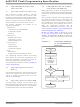
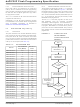
The Enhanced ICSP mode is entered by holding PGC
and PGD high, and then raising MCLR/V
(high voltage), as illustrated in
the code memory, data EEPROM and Configuration
bits can be efficiently programmed using the program-
ming executive commands that are serially transferred
using PGC and PGD.
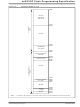
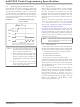
FIGURE 5-2:
DS70102K-page 6
Note 1: The sequence that places the device into
MCLR/V
V
PGD
PGC
DD
2: Before entering Enhanced ICSP mode,
3: When in Enhanced ICSP mode, the SPI
Entering Enhanced ICSP Mode
V
IHH
PP
Enhanced ICSP mode places all unused
I/Os in the high-impedance state.
clock switching must be disabled using
ICSP, by programming the FCKSM<1:0>
bits in the FOSC Configuration register to
‘11’ or ‘10’.
output pin (SDO1) will toggle while the
device is being programmed.
P6
ENTERING ENHANCED
ICSP™ MODE
PGD = Input
P7
Figure
5-2. In this mode,
PP
to V
IHH
5.3
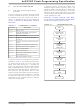
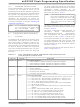
Before a chip can be programmed, it must be erased.
The Bulk Erase command (ERASEB) is used to perform
this task. Executing this command with the MS
command field set to 0x3 erases all code memory, data
EEPROM and code-protect Configuration bits. The
Chip Erase process sets all bits in these three memory
regions to ‘1’.
Since non-code-protect Configuration bits cannot be
erased, they must be manually set to ‘1’ using multiple
PROGC commands. One PROGC command must be
sent for each Configuration register (see
“Configuration Bits
If Advanced Security features are enabled, then indi-
vidual Segment Erase operations would need to be
performed, depending on which segment needs to be
programmed at a given stage of system programming.
The user should have the flexibility to select specific
segments for programming.
5.4
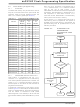
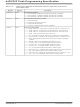
The term “Blank Check” means to verify that the device
has been successfully erased and has no programmed
memory cells. A blank or erased memory cell reads as
‘1’. The following memories must be blank checked:
• All implemented code memory
• All implemented data EEPROM
• All Configuration bits (for their default value)
The Device ID registers (0xFF0000:0xFF0002) can be
ignored by the Blank Check since this region stores
device information that cannot be erased. Additionally,
all unimplemented memory space should be ignored
from the Blank Check.
The QBLANK command is used for the Blank Check. It
determines if the code memory and data EEPROM are
erased by testing these memory regions. A ‘BLANK’ or
‘NOT BLANK’ response is returned. The READD
command is used to read the Configuration registers. If
it is determined that the device is not blank, it must be
erased (see
attempting to program the chip.
Note:
Chip Erase
Blank Check
The Device ID registers cannot be erased.
These registers remain intact after a Chip
Erase is performed.
Section 5.3 “Chip
Programming”).
© 2010 Microchip Technology Inc.
Erase”) before
Section 5.7
Related parts for DSPIC30F6012A-20E/PT
Image
Part Number
Description
Manufacturer
Datasheet
Request
R

Part Number:
Description:
High-Performance, 16-Bit Digital Signal Controllers
Manufacturer:
MICROCHIP [Microchip Technology]
Datasheet:

Part Number:
Description:
IC DSPIC MCU/DSP 144K 64TQFP
Manufacturer:
Microchip Technology
Datasheet:
Part Number:
Description:
IC DSPIC MCU/DSP 144K 64TQFP
Manufacturer:
Microchip Technology
Datasheet:
Part Number:
Description:
IC DSPIC MCU/DSP 144K 64TQFP
Manufacturer:
Microchip Technology
Datasheet:

Part Number:
Description:
Digital Signal Processors & Controllers - DSP, DSC 20MHz 144KB Flash
Manufacturer:
Microchip Technology

Part Number:
Description:
Manufacturer:
Microchip Technology Inc.
Datasheet:
Part Number:
Description:
Manufacturer:
Microchip Technology Inc.
Datasheet:
Part Number:
Description:
Manufacturer:
Microchip Technology Inc.
Datasheet:
Part Number:
Description:
Manufacturer:
Microchip Technology Inc.
Datasheet:
Part Number:
Description:
Manufacturer:
Microchip Technology Inc.
Datasheet:
Part Number:
Description:
Manufacturer:
Microchip Technology Inc.
Datasheet: