EP2C5F256C8 Altera, EP2C5F256C8 Datasheet - Page 16
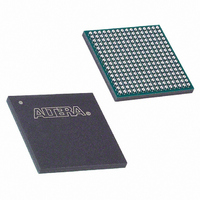
EP2C5F256C8
Manufacturer Part Number
EP2C5F256C8
Description
IC CYCLONE II FPGA 5K 256-FBGA
Manufacturer
Altera
Series
Cyclone® IIr
Datasheet
1.EP2C5T144C8N.pdf
(168 pages)
Specifications of EP2C5F256C8
Number Of Logic Elements/cells
4608
Number Of Labs/clbs
288
Total Ram Bits
119808
Number Of I /o
158
Voltage - Supply
1.15 V ~ 1.25 V
Mounting Type
Surface Mount
Operating Temperature
0°C ~ 85°C
Package / Case
256-FBGA
Family Name
Cyclone® II
Number Of Logic Blocks/elements
4608
# I/os (max)
158
Frequency (max)
402.58MHz
Process Technology
90nm
Operating Supply Voltage (typ)
1.2V
Logic Cells
4608
Ram Bits
119808
Operating Supply Voltage (min)
1.15V
Operating Supply Voltage (max)
1.25V
Operating Temp Range
0C to 85C
Operating Temperature Classification
Commercial
Mounting
Surface Mount
Pin Count
256
Package Type
FBGA
No. Of Macrocells
4608
Family Type
Cyclone II
No. Of I/o's
158
Clock Management
PLL
I/o Supply Voltage
3.6V
Operating Frequency Max
320MHz
Rohs Compliant
No
Lead Free Status / RoHS Status
Contains lead / RoHS non-compliant
Number Of Gates
-
Lead Free Status / Rohs Status
Not Compliant
Other names
544-1446
Available stocks
Company
Part Number
Manufacturer
Quantity
Price
Company:

Part Number:
EP2C5F256C8
Manufacturer:
TOSHIBA
Quantity:
1
Part Number:
EP2C5F256C8
Manufacturer:
ALTERA/阿尔特拉
Quantity:
20 000
Company:
Part Number:
EP2C5F256C8N
Manufacturer:
ALTBRA
Quantity:
36
Company:
Part Number:
EP2C5F256C8N
Manufacturer:
ALTERA82
Quantity:
1 080
Part Number:
EP2C5F256C8N
Manufacturer:
ALTERA/阿尔特拉
Quantity:
20 000


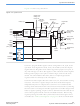
Logic Elements
2–4
Cyclone II Device Handbook, Volume 1
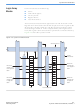
Another special packing mode allows the register output to feed back into
the LUT of the same LE so that the register is packed with its own fan-out
LUT, providing another mechanism for improved fitting. The LE can also
drive out registered and unregistered versions of the LUT output.
In addition to the three general routing outputs, the LEs within an LAB
have register chain outputs. Register chain outputs allow registers within
the same LAB to cascade together. The register chain output allows an
LAB to use LUTs for a single combinational function and the registers to
be used for an unrelated shift register implementation. These resources
speed up connections between LABs while saving local interconnect
resources. See
information on register chain connections.
LE Operating Modes
The Cyclone II LE operates in one of the following modes:
■
■
Each mode uses LE resources differently. In each mode, six available
inputs to the LE—the four data inputs from the LAB local interconnect,
the LAB carry-in from the previous carry-chain LAB, and the register
chain connection—are directed to different destinations to implement the
desired logic function. LAB-wide signals provide clock, asynchronous
clear, synchronous clear, synchronous load, and clock enable control for
the register. These LAB-wide signals are available in all LE modes.
The Quartus
such as library of parameterized modules (LPM) functions, automatically
chooses the appropriate mode for common functions such as counters,
adders, subtractors, and arithmetic functions. If required, you can also
create special-purpose functions that specify which LE operating mode to
use for optimal performance.
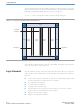
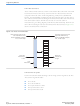
Normal Mode
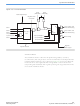
The normal mode is suitable for general logic applications and
combinational functions. In normal mode, four data inputs from the LAB
local interconnect are inputs to a four-input LUT (see
Quartus II Compiler automatically selects the carry-in or the data3
signal as one of the inputs to the LUT. LEs in normal mode support
packed registers and register feedback.
Normal mode
Arithmetic mode
®
II software, in conjunction with parameterized functions
“MultiTrack Interconnect” on page 2–10
Figure
Altera Corporation
for more
February 2007
2–3). The
Related parts for EP2C5F256C8
Image
Part Number
Description
Manufacturer
Datasheet
Request
R

Part Number:
Description:
CYCLONE II STARTER KIT EP2C20N
Manufacturer:
Altera
Datasheet:


Part Number:
Description:
CPLD, EP610 Family, ECMOS Process, 300 Gates, 16 Macro Cells, 16 Reg., 16 User I/Os, 5V Supply, 35 Speed Grade, 24DIP
Manufacturer:
Altera Corporation
Datasheet:
Part Number:
Description:
CPLD, EP610 Family, ECMOS Process, 300 Gates, 16 Macro Cells, 16 Reg., 16 User I/Os, 5V Supply, 15 Speed Grade, 24DIP
Manufacturer:
Altera Corporation
Datasheet:
Part Number:
Description:
Manufacturer:
Altera Corporation
Datasheet:
Part Number:
Description:
CPLD, EP610 Family, ECMOS Process, 300 Gates, 16 Macro Cells, 16 Reg., 16 User I/Os, 5V Supply, 30 Speed Grade, 24DIP
Manufacturer:
Altera Corporation
Datasheet:
Part Number:
Description:
High-performance, low-power erasable programmable logic devices with 8 macrocells, 10ns
Manufacturer:
Altera Corporation
Datasheet:
Part Number:
Description:
High-performance, low-power erasable programmable logic devices with 8 macrocells, 7ns
Manufacturer:
Altera Corporation
Datasheet:
Part Number:
Description:
Classic EPLD
Manufacturer:
Altera Corporation
Datasheet:
Part Number:
Description:
High-performance, low-power erasable programmable logic devices with 8 macrocells, 10ns
Manufacturer:
Altera Corporation
Datasheet:
Part Number:
Description:
Manufacturer:
Altera Corporation
Datasheet:
Part Number:
Description:
Manufacturer:
Altera Corporation
Datasheet:
Part Number:
Description:
Manufacturer:
Altera Corporation
Datasheet:
Part Number:
Description:
CPLD, EP610 Family, ECMOS Process, 300 Gates, 16 Macro Cells, 16 Reg., 16 User I/Os, 5V Supply, 25 Speed Grade, 24DIP
Manufacturer:
Altera Corporation
Datasheet: